
Learning, Leading, and Serving: Reflections from the Civic Learning Council's Visit to Bangladesh
In mid-June, MCN’s Civic Learning Council took its mission on the road, spending a week in Bangladesh to listen to key stakeholders’ needs, objectives and reach, while exploring ways to scale civic learning impact. Simran Kaur, MCN's University Relations Manager, and Dr. Sue Maxam, Pace University’s Assistant Provost for Wellness and CLC’s Co-Chair were hosted by Dr. Dave Dowland, CLC Co-Chair and Registrar of BRAC University in Bangladesh, where he and his staff (Deepti Sarkar, Sakib Bin Quader, and Chowdhury Muddaser Khan) organized an unforgettable trip that left an indelible mark on us.
We met several nonprofit organizations and individuals dedicated to advancing the UN Sustainable Development Goals; connected with Millennium Fellowship alumni and prospective Fellows; visited the world’s largest refugee camps (Rohingya); and even attended the Get Engaged Conference for student change-makers around the world. We toured Bangladesh Liberation War Museum, with Mofidul Hoque, a distinguished researcher and essayist, giving insights to the history and resilience of Bangladesh. The visit convinced us that Bangladesh is comprised of some of the kindest, most respectful, generous, socially responsible, and resilient people I have ever met, and so committed to making a positive difference in the lives of all those who are suffering in some way or another.

We met Mira Mitra, the CEO of Bharasa Institute of Social Development and Human Advancement (BISDHA). After 23 years as the Communication for Development Specialist at UNICEF Bangladesh, she founded this nonprofit organization, whose main focus is empowering poor and underprivileged individuals — especially youth and women — through vocational skill development, care-giving services, and the social health of children at early age. The passion and commitment of the entire staff was palpable and the services they provide have proven vital to those in need as they take steps toward a more secure, uplifting, and self-reliant future.
BRAC University (BRACU) was our next “stop” – part of the worldwide BRAC social
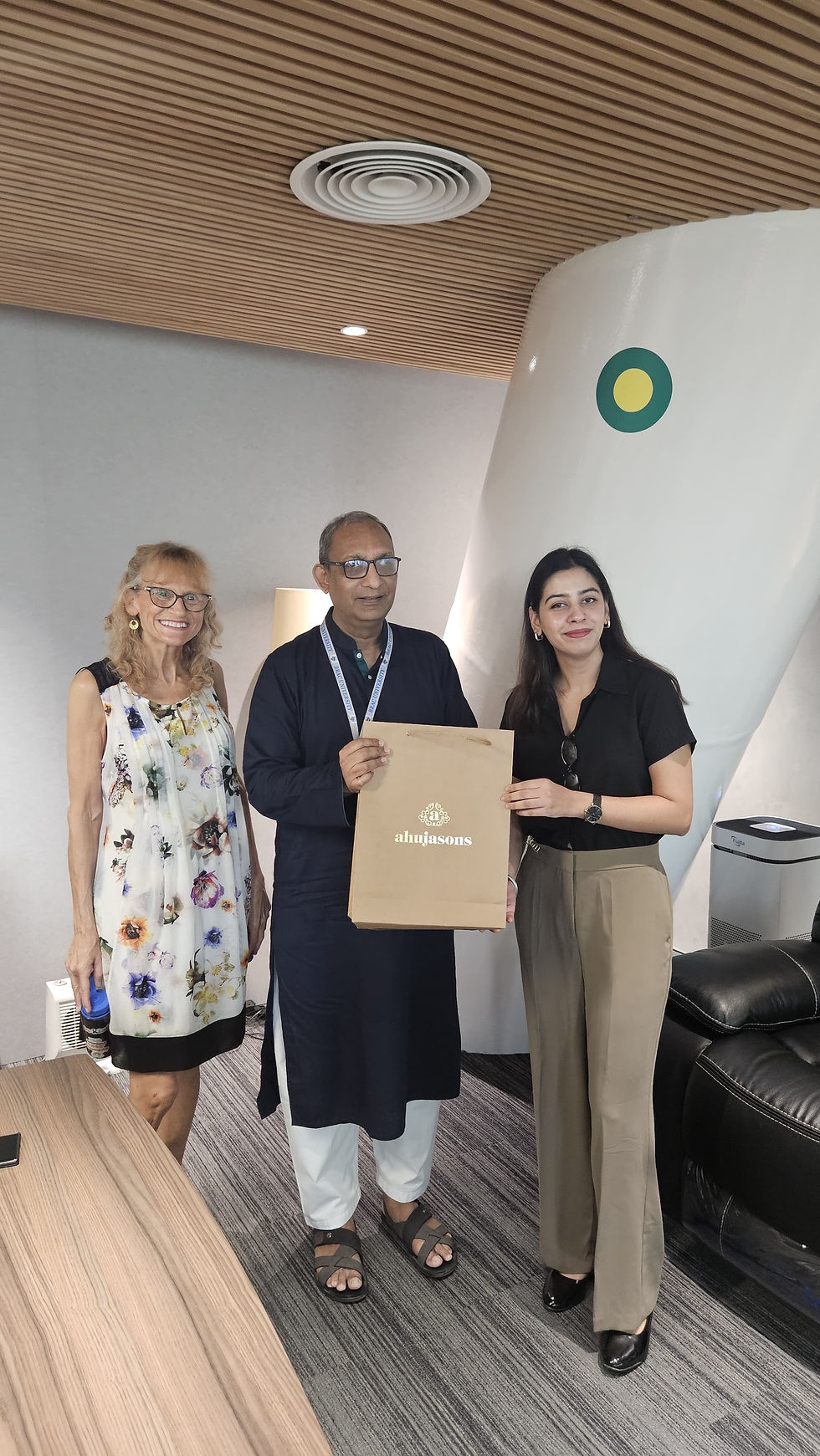
movement. We had the honor of twice meeting the Vice Chancellor of BRACU, Professor Syed Ferhat Anwar, and we were truly inspired by the University’s mission and vision which, like MCN, emphasizes empathy, societal impact, and environmental responsibility. In fact, their pioneering, award-winning vertical campus is the epitome of green and sustainable…a lush, energy‑efficient, virtual urban oasis in a megacity. Halfway through the tour, we met students from International Hope School, who are now looking forward to an opportunity to apply to MCN when they reach university. We also visited the BRACU Residential Campus in Savar – a place of learning by doing, through experience, enjoyment and service to others – thanks to Mir Sadik Faisal and his staff. Their partnership with the many programs BRAC International offers (see below) and support of the Rohingya refugees was truly heartening and inspiring!
We then had the delight of meeting 18 Millennium Fellowship alumni and applicants at BRACU, thanks to Tahsina Rahman, Associate Director & Head of Student Life. Students openly and passionately discussed their past, current, and proposed social impact projects whose themes included such topics as mental health, invisible disability awareness, climate activism, plastic reduction, and much more! They shared how their life experiences affected them and how they want to dedicate themselves to supporting those suffering with similar issues. Fun fact: The Millennium Fellowship is so popular at BRACU that they had a record 500+ applications this year! 😊
Next we visited BRAC Institute of Educational Development (BIED), winner of the 2019 Yidan Prize, which runs community-based, early learning centers which employ high-quality, low-cost, play-based, and culturally relevant learning approach for displaced/vulnerable children aged 1 to 5 years in low-resource settings. Sayed Mahmud Sunny, Senior Communications Manager, explained that the goal is to create innovative solutions for children to become engaged, empathetic, and empowered individuals. As with the rest of the world, there is ever-growing emphasis on the mental health of the children. Their research and advocacy, which is carried out through multi-dimensional angles, has played an incredibly important role in developing the education sector in Bangladesh and in other countries, with impact on millions. Meeting with their staff was so inspiring, as their commitment to making a positive, lasting difference in the lives of so many marginalized people was palpable!
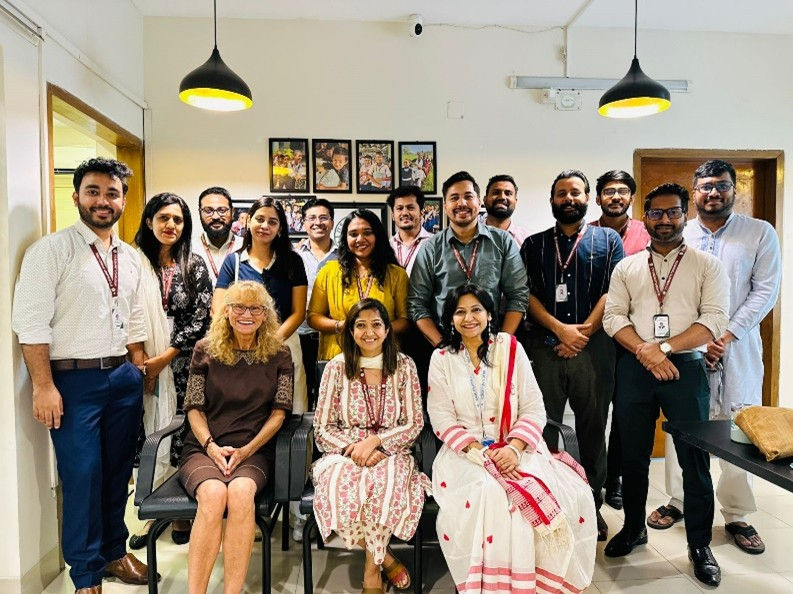
We connected with It's Humanity Foundation. Founded by a BRACU alum, Md. Adnan Hossain, this organization provides quality education and opportunities for every child, aiming to break the cycle of poverty in marginalized communities. By establishing schools and offering access to quality education to over 5,300 children in Bangladesh so far, they focus on empowering both children and their families in marginalized communities through free education, vocational training, basic healthcare services, and support for those impacted by climate change disasters. Simran and I were so impressed with their work that we are each sponsoring a child for the upcoming year…just one of the many ways people can support their efforts! 😊

Approximately 1.5 million Rohingya refugees live in Bangladesh, including 1.2 million in the largest refugee camp in the world in Cox’s Bazar. The Rohingya living in Bangladesh are an ethnic minority denied citizenship in Myanmar due to the genocide there, rendering them the world’s largest stateless population. Thanks to Shahariar Sadat Executive Director, Centre for Peace and Justice (CPJ) at BRAC University and Md. Mofaq Kharul Islam (Taufiq) Associate Director of CPJ, we visited the camps and had the opportunity to meet with incredibly active and inspiring youth leaders from several key educational enrichment and social impact programs. One of CPJ’s flagship initiatives, the Refugee Higher Education Access Program (RhEAP), implemented in collaboration with Bard College, is a year-long bridging program for young Rohingya refugees aged 16-25, focusing on building critical, analytical and digital literacy skills. Some of these program students go on to local businesses and jobs in camps.

CPJ runs Peace Cafés throughout the camps - a community-led platform for social change, empowering the refugee students to identify local challenges, find root causes and, with near-peer Peace Café mentors, build solutions locally in camps, often with seed money. Their model is quite similar to that of the Millennium Fellowship and their social action projects were impressive, including an organic garden and a water

filtration system! To say these students were committed to “being the change” they wanted to see in their corner of the world would be the understatement of the century!! We were so inspired by their yearning to learn, problem-solve, and have a real and lasting impact on the conditions of the refugee camp. The hope is to continue expanding these Peace Cafés not only in this camp but in camps around the world and we in the CLC, would welcome the opportunity to discuss how we can potentially help make this happen!
Most people are unaware that Bangladesh is one of the world’s youngest independent countries, with youth making up one-third of the population. Enter the BRAC Center Youth Program, which supports young people through key life transitions and encourages ongoing community actions through empathetic leadership skills and character development. They have built a highly successful program in Bangladesh whose values and activities are very similar to those of the Millennium Fellowship. Shariful Hasan, their Associate Director, explained to us that, to date, over 1600 young people from 17 districts have led over 270 community initiatives on climate action, education and gender inclusion, health awareness and social justice. Simran and I were struck by the tremendous impact this organization has had on the youth of this country and the commitment of their staff in making this happen.
On our last day in Bangladesh, we met Arafat Hossain, Founder & Executive Director of Youth Climate Network (YCN) where he works with young people to advance climate justice,

strengthen community resilience, and amplify the voices of frontline coastal communities. Through youth-led initiatives, awareness programs, and disaster preparedness efforts, his organization focuses on building local capacity and ensuring that vulnerable communities are included in climate conversations and solutions. Alongside climate advocacy, Arafat is committed to expanding access to education and sustainable livelihoods. To that end, he founded Humanity Public Library to support lifelong learning in remote, underserved coastal areas. Arafat strongly believes that lasting change happens when communities are equipped with the knowledge, tools, and platforms to lead their own development. Since 2022, YCN has bridged local grassroots action with regional policy platforms, engaging with partners such as UNFCCC YOUNGO, UNDP Bangladesh, UNICEF, UN Women, ActionAid Bangladesh, WWF Bangladesh, Dept. of Youth Development, Khulna University, and the Asia Pacific Youth Climate Coalition. For such a young leader, who himself was impacted by climate-induced disasters before going to college, Arafat has had an enormous impact on the communities he serves.
So, how might the CLC/MCN collaborate with the leaders of these wonderful nonprofit organizations, including the programs working in the refugee camp (and other refugee camps around the world)?
Here are a few ideas to consider, which will be discussed in more detail by the CLC.
· Invite leaders of these nonprofits serve as guest speakers at a global MCN webinar;
· Offer the opportunity for Millennium Fellows to do their social impact project alongside one of the organizations
· Create opportunities for links, collaboration, and/or joint projects with these nonprofits as well as refugees living on campus and working on social projects such as the network of peace cafés in the Cox’s Bazaar camps in Bangladesh or Windle International in Kenya. There is potential for capacity building to extend such initiatives in partnership with MCN.
· Encourage/incentivize the recruitment of refugees who are enrolled on university programs (whether in person, online or hybrid) to join the MCN program.
· Form a lighter version of the MCN fellowship as a means of engagement for refugees living in camps but who are not in college.
· Build awareness of refugee issues as well as issues from other marginalized/disadvantaged communities through MCN fellowship development activities.
I want to end by, once again, emphasizing how inspiring it was to meet with so many people who are dedicating their lives to effectuating positive change in the lives of the vulnerable, disenfranchised, and all those in need of support in some form or another. The passion for their work was palpable, and it was so inspiring to see firsthand the scope and impact of their efforts.
Article Written By : Dr. Sue Maxam, Civic Learning Council Co-Chair, July 2026


Comments